The Story
Mullein is a medicinal herb that's been in use for thousands of years, mainly to treat coughs and respiratory conditions, but also as a poultice topically for wounds, burns and skin infections.
The dried yellow flowers and leaves have a slightly earthy, mildly bitter taste, but can make a pleasant tea when sweetened with honey. Safely drink 3 to 4 cups a day.
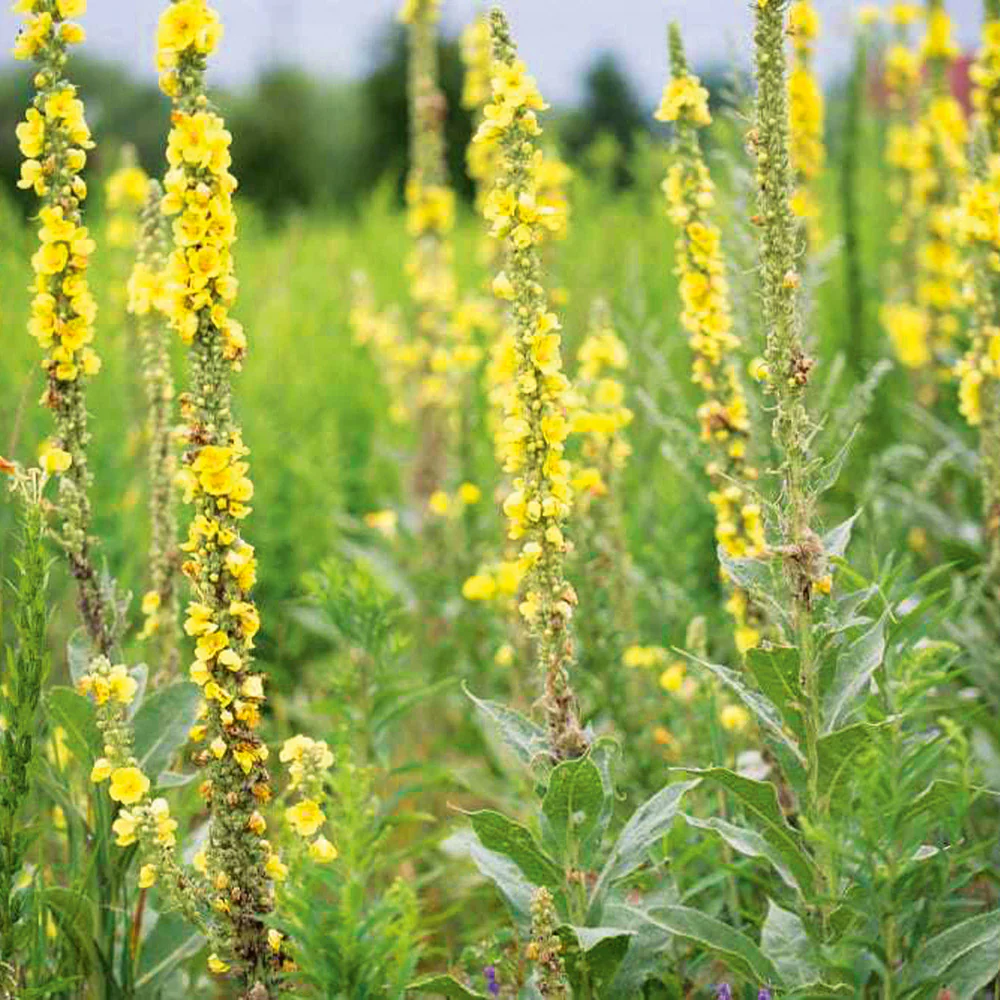
A biennial, forming a rosette of soft woolly grey leaves the first year before growing a tall flowering spike the second season. Flowers over a long period of time, even in dry soils.
Prefers poor, stony soil to grow in and is often found growing in river beds or roadsides.
Also known as woolly mullein, moth mullein and white mullein.
Sowing Mullein
Stratify the seeds before sowing to break seed dormancy and encourage germination. To stratify, chill the seeds in the fridge for 2-3 weeks before sowing. Ensure the seed packet is unopened or the seed is in an airtight container, as certain fruits and vegetables in the fridge that emit ethylene can impact the germination of seed.
Mullein requires light to germinate, sow seeds by surface sowing. Scatter your seeds onto the ground's surface, ideally stonier ground. Gently press seeds into the soil without completely covering, as light is essential to aid in germination. Keep soil moist.
Caring for Mullein
Mullein prefers lower-quality soil, particularly rockier areas. Ensure the soil is well-draining and keep the soil moist until the seed has germinated and young plants are well-established. From there, minimal watering is required. Allow space for flowering stalk development during the second year of growth.
Uses for Mullein
Mullein leaves and blooms are commonly dried out for herbal teas or infusions. Traditional preparations also include topical poultices for skin application. Wildlife gardens also benefit from the extended flowering periods that attract pollinators.
Description
Mullein is a medicinal herb that's been in use for thousands of years, mainly to treat coughs and respiratory conditions, but also as a poultice topically for wounds, burns and skin infections.
The dried yellow flowers and leaves have a slightly earthy, mildly bitter taste, but can make a pleasant tea when sweetened with honey. Safely drink 3 to 4 cups a day.
A biennial, forming a rosette of soft woolly grey leaves the first year before growing a tall flowering spike the second season. Flowers over a long period of time, even in dry soils.
Prefers poor, stony soil to grow in and is often found growing in river beds or roadsides.
Also known as woolly mullein, moth mullein and white mullein.
Sowing Mullein
Stratify the seeds before sowing to break seed dormancy and encourage germination. To stratify, chill the seeds in the fridge for 2-3 weeks before sowing. Ensure the seed packet is unopened or the seed is in an airtight container, as certain fruits and vegetables in the fridge that emit ethylene can impact the germination of seed.
Mullein requires light to germinate, sow seeds by surface sowing. Scatter your seeds onto the ground's surface, ideally stonier ground. Gently press seeds into the soil without completely covering, as light is essential to aid in germination. Keep soil moist.
Caring for Mullein
Mullein prefers lower-quality soil, particularly rockier areas. Ensure the soil is well-draining and keep the soil moist until the seed has germinated and young plants are well-established. From there, minimal watering is required. Allow space for flowering stalk development during the second year of growth.
Uses for Mullein
Mullein leaves and blooms are commonly dried out for herbal teas or infusions. Traditional preparations also include topical poultices for skin application. Wildlife gardens also benefit from the extended flowering periods that attract pollinators.