The Story
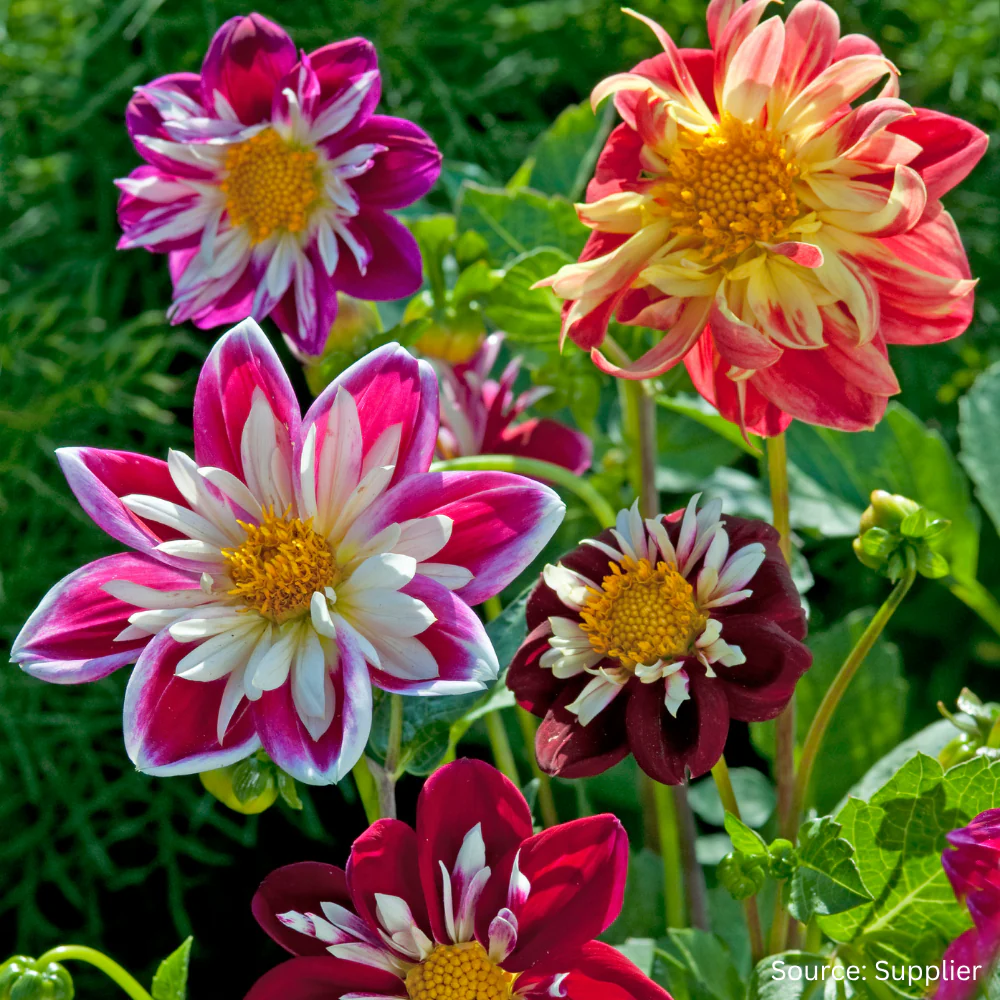
Dahlia Dandy (Dahlia pinnata) is a charming, compact dahlia variety grown from seed, prized for its vibrant single blooms and attractive dark foliage. The pinwheel like flowers, which come in shades of red, pink, orange, yellow and white, with a unique set of central petals, often with contrasting colours that attract bees and butterflies. The plants are bushy and free-flowering, making them ideal for containers, garden beds and cut flower gardens.
Unlike tuber-grown dahlias, the ‘Dandy’ series is easily grown from seed and offers a more compact size. This makes them perfect for smaller spaces, edging borders, or brightening up patio pots. As cut flowers, their vivid colours provide excellent material for casual summer bouquets.
Collarette dahlias are known to be more low maintenance than other types of dahlias. This is due to their open and branching plant habit which doesn’t require staking, and they are “self-cleaning” in that as their flowers fade, their petals drop to the ground rather than wilting and rotting on the stem, so even if you fall behind on picking or deadheading, the plants always look fresh and tidy.
Collarette dahlias are loved by pollinators, and their open flower form gives them a more wildflower-like quality that is beautiful for floral arrangements although may have a shorter-than-normal vase life.
Home gardeners can sow Dahlia Dandy seeds indoors in late August to October, using seed trays filled with a free-draining mix. Sow seeds 5 mm deep and keep them at 20–25?°C. Germination takes 7–14 days. Once seedlings have developed a few true leaves and the risk of frost has passed, they can be transplanted outdoors, spaced 25–30 cm apart. Flowering begins around 90–100 days from sowing.
Dandy dahlias prefer full sun and rich, well-drained soil. Regular watering is important, especially during dry spells, but avoid waterlogging. Removing spent blooms (deadheading) will encourage continuous flowering through summer and into early autumn. Easy to grow and full of colour.
When you grow dahlias from seed, you generally cannot expect blooms to be true to type. Dahlia seed mixes are best thought of as genetic lotteries: great for curiosity, bedding displays, or breeding—but not for reproducing a known variety.
Dahlias are highly genetically variable. They are usually cross-pollinated hybrids, so the seeds carry a mixed set of traits from both parent plants. That means:
- Flower form, colour, shape, size, and plant height can all vary widely
- Each seedling is essentially a new, unique dahlia
If you want an exact copy of a dahlia you like, you need to grow it from tubers or cuttings, not seed.
Description
Dahlia Dandy (Dahlia pinnata) is a charming, compact dahlia variety grown from seed, prized for its vibrant single blooms and attractive dark foliage. The pinwheel like flowers, which come in shades of red, pink, orange, yellow and white, with a unique set of central petals, often with contrasting colours that attract bees and butterflies. The plants are bushy and free-flowering, making them ideal for containers, garden beds and cut flower gardens.
Unlike tuber-grown dahlias, the ‘Dandy’ series is easily grown from seed and offers a more compact size. This makes them perfect for smaller spaces, edging borders, or brightening up patio pots. As cut flowers, their vivid colours provide excellent material for casual summer bouquets.
Collarette dahlias are known to be more low maintenance than other types of dahlias. This is due to their open and branching plant habit which doesn’t require staking, and they are “self-cleaning” in that as their flowers fade, their petals drop to the ground rather than wilting and rotting on the stem, so even if you fall behind on picking or deadheading, the plants always look fresh and tidy.
Collarette dahlias are loved by pollinators, and their open flower form gives them a more wildflower-like quality that is beautiful for floral arrangements although may have a shorter-than-normal vase life.
Home gardeners can sow Dahlia Dandy seeds indoors in late August to October, using seed trays filled with a free-draining mix. Sow seeds 5 mm deep and keep them at 20–25?°C. Germination takes 7–14 days. Once seedlings have developed a few true leaves and the risk of frost has passed, they can be transplanted outdoors, spaced 25–30 cm apart. Flowering begins around 90–100 days from sowing.
Dandy dahlias prefer full sun and rich, well-drained soil. Regular watering is important, especially during dry spells, but avoid waterlogging. Removing spent blooms (deadheading) will encourage continuous flowering through summer and into early autumn. Easy to grow and full of colour.
When you grow dahlias from seed, you generally cannot expect blooms to be true to type. Dahlia seed mixes are best thought of as genetic lotteries: great for curiosity, bedding displays, or breeding—but not for reproducing a known variety.
Dahlias are highly genetically variable. They are usually cross-pollinated hybrids, so the seeds carry a mixed set of traits from both parent plants. That means:
- Flower form, colour, shape, size, and plant height can all vary widely
- Each seedling is essentially a new, unique dahlia
If you want an exact copy of a dahlia you like, you need to grow it from tubers or cuttings, not seed.