Original: $3.46
-65%$3.46
$1.21The Story
A fast-growing tropical tree that is an extraordinary edible superfood, Moringa, also referred to as Horseradish Tree or Drumstick Tree, are rich in vitamins, minerals and a complete protein. Valued across tropical regions, the growth habit of Moringa suits home gardeners who seek productive, edible plants with ornamental appeal.
Moringa is a heat-loving plant that is fast-growing in sunny locations and thrives in most soil types, but doesn't tolerate hard frosts.
Moringa is remarkably versatile — virtually every part of the plant is edible and used differently:
Leaves
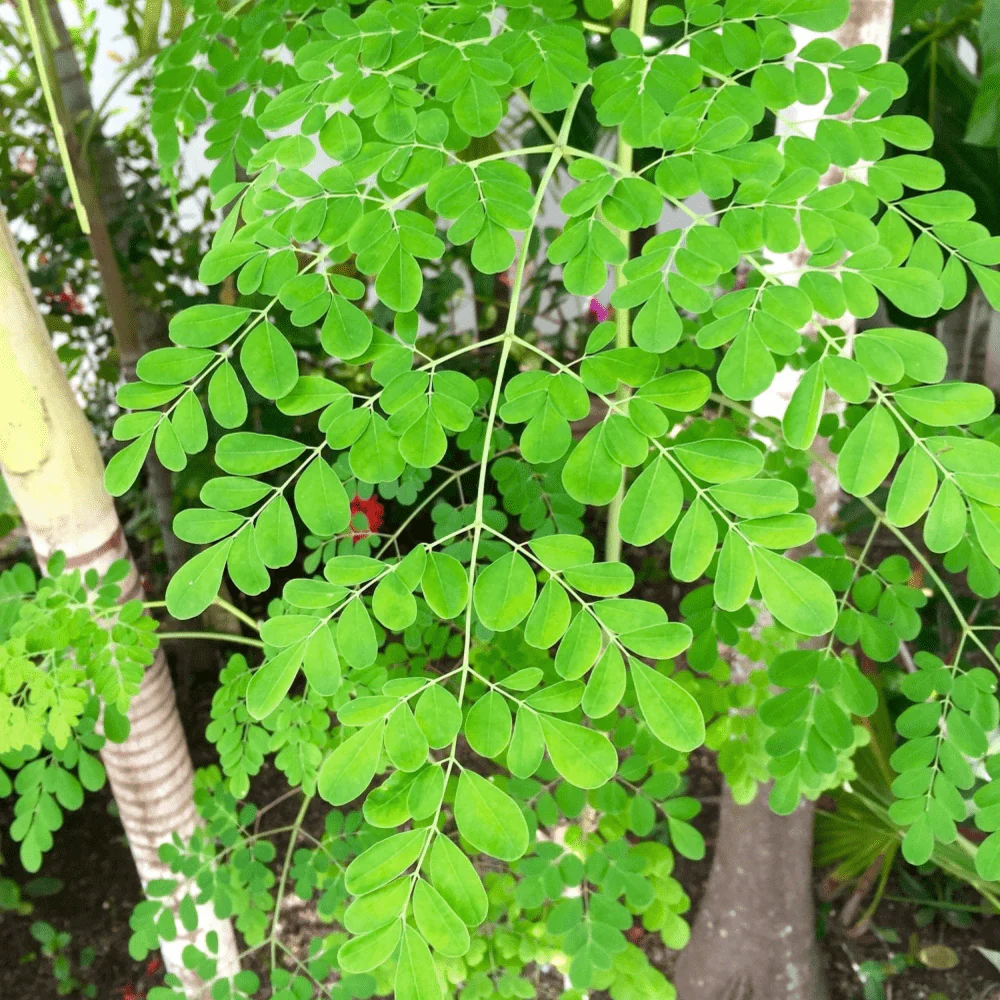
The most commonly used part. Young leaves and shoots are eaten fresh in salads, added to smoothies and juices, or cooked like spinach in stir-fries, curries, soups and dals. They have a mild, slightly peppery, watercress-like flavour. Leaves are also dried and ground into a fine green powder — the "superfood" moringa powder sold in health stores — added to smoothies, sprinkled on food or stirred into drinks.
Pods (Drumsticks)
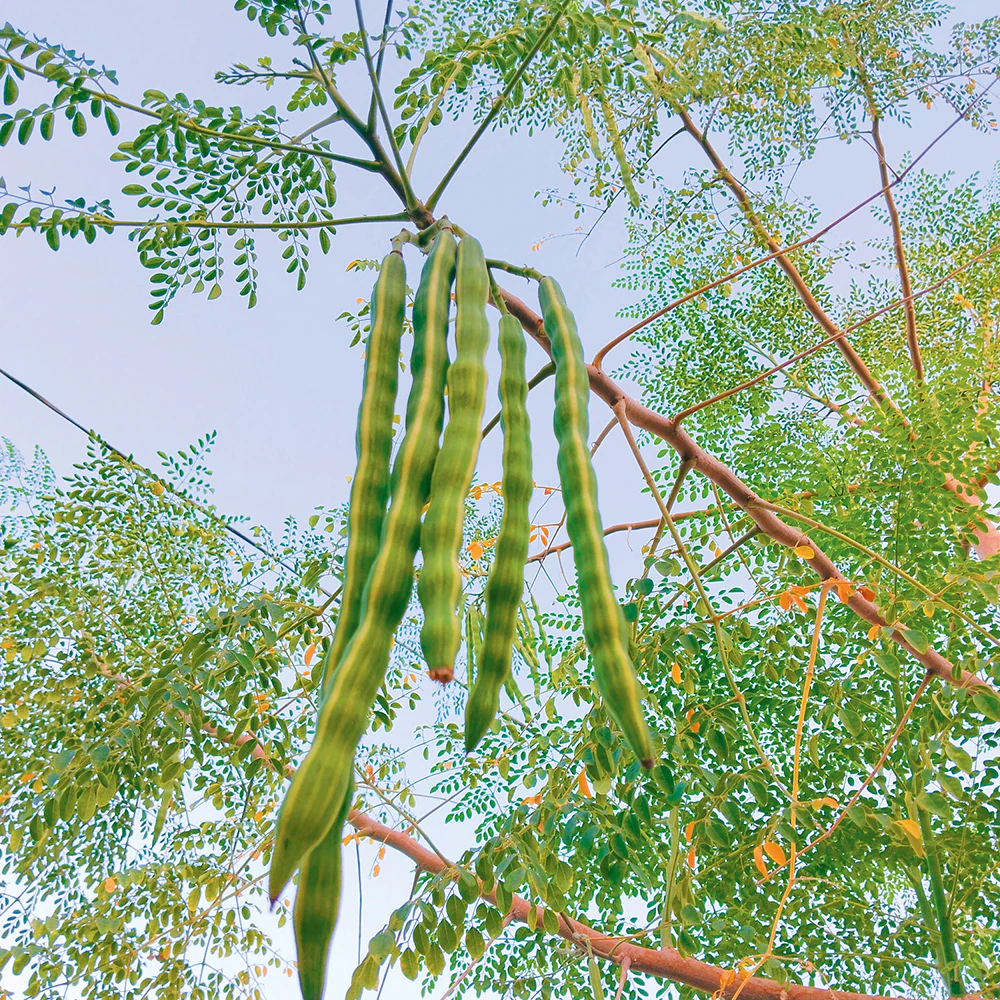
The long, green seed pods — commonly called drumsticks in South Asian cooking — are harvested young and cooked in curries, soups and stews. You don't eat the outer skin; instead you scrape the soft interior flesh and seeds out with your teeth. They're a staple in Indian cuisine, particularly in sambar (a South Indian lentil soup).
Seeds
Young seeds from immature pods are eaten like peas — boiled or roasted. Mature dried seeds are pressed for moringa oil (also called ben oil), a high-quality edible and cosmetic oil. The seeds also have water-purifying properties.
Flowers
Edible and mildly sweet — used in salads, fritters, or brewed as a tea.
Roots
The root is ground and used as a condiment in some cultures, described as tasting similar to horseradish (moringa is sometimes called the horseradish tree). However the roots contain alkaloids so consumption should be moderate.
Why it's considered a superfood
The leaves are extraordinarily nutritious — gram for gram they contain more vitamin C than oranges, more calcium than milk, more iron than spinach, and are a complete protein source, which is exceptionally rare for a plant. This makes it particularly valued in food security contexts globally.
Sowing Moringa
Begin sowing during warmer months once soil temperatures remain consistently high. A heat pad is recommended to germinate Moringa seed as the soil temperature for optimum germination is 20-30°C.
Due to the very hard seed coat, it is recommended to scarify the seed prior to sowing. To scarify seed slightly, nick (toenail clippers), chip or sand one end of the seed. Soaking in warm water for 2-4 hours may also help to soften the seed coat prior to sowing.
Sow seed about 2.5cm deep and place the seed horizontally/flat and cover with seed raising mix. Maintain moisture until germination occurs.
Prepared seeds perform best when sown directly into deep containers before transplanting to their final location in the garden once seedlings are large enough and have been hardened off. Biodegradable containers are best so the seedling roots do not need to be disturbed when ready to plant in the garden.
In warm climates it can be preferable to sow seeds directly where the tree is intended to grow because they have a long, fragile taproot that can be sensitive to transplanting.
Care for Moringa
Young Moringa Horseradish trees benefit from sheltered placement away from frost-prone areas. Regular watering during establishment encourages strong root development, while mature trees tolerate dry conditions well. Light pruning supports branching and a manageable size within home gardens.
Uses for Moringa
Moringa Horseradish plants can be used for culinary purposes and traditional wellness practices, with many plant parts containing dense nutrients. Moringa Horseradish is also used for ornamental reasons in the garden.
Details & Craftsmanship
Every detail has been carefully considered to bring you the perfect product.
Description
A fast-growing tropical tree that is an extraordinary edible superfood, Moringa, also referred to as Horseradish Tree or Drumstick Tree, are rich in vitamins, minerals and a complete protein. Valued across tropical regions, the growth habit of Moringa suits home gardeners who seek productive, edible plants with ornamental appeal.
Moringa is a heat-loving plant that is fast-growing in sunny locations and thrives in most soil types, but doesn't tolerate hard frosts.
Moringa is remarkably versatile — virtually every part of the plant is edible and used differently:
Leaves
The most commonly used part. Young leaves and shoots are eaten fresh in salads, added to smoothies and juices, or cooked like spinach in stir-fries, curries, soups and dals. They have a mild, slightly peppery, watercress-like flavour. Leaves are also dried and ground into a fine green powder — the "superfood" moringa powder sold in health stores — added to smoothies, sprinkled on food or stirred into drinks.
Pods (Drumsticks)
The long, green seed pods — commonly called drumsticks in South Asian cooking — are harvested young and cooked in curries, soups and stews. You don't eat the outer skin; instead you scrape the soft interior flesh and seeds out with your teeth. They're a staple in Indian cuisine, particularly in sambar (a South Indian lentil soup).
Seeds
Young seeds from immature pods are eaten like peas — boiled or roasted. Mature dried seeds are pressed for moringa oil (also called ben oil), a high-quality edible and cosmetic oil. The seeds also have water-purifying properties.
Flowers
Edible and mildly sweet — used in salads, fritters, or brewed as a tea.
Roots
The root is ground and used as a condiment in some cultures, described as tasting similar to horseradish (moringa is sometimes called the horseradish tree). However the roots contain alkaloids so consumption should be moderate.
Why it's considered a superfood
The leaves are extraordinarily nutritious — gram for gram they contain more vitamin C than oranges, more calcium than milk, more iron than spinach, and are a complete protein source, which is exceptionally rare for a plant. This makes it particularly valued in food security contexts globally.
Sowing Moringa
Begin sowing during warmer months once soil temperatures remain consistently high. A heat pad is recommended to germinate Moringa seed as the soil temperature for optimum germination is 20-30°C.
Due to the very hard seed coat, it is recommended to scarify the seed prior to sowing. To scarify seed slightly, nick (toenail clippers), chip or sand one end of the seed. Soaking in warm water for 2-4 hours may also help to soften the seed coat prior to sowing.
Sow seed about 2.5cm deep and place the seed horizontally/flat and cover with seed raising mix. Maintain moisture until germination occurs.
Prepared seeds perform best when sown directly into deep containers before transplanting to their final location in the garden once seedlings are large enough and have been hardened off. Biodegradable containers are best so the seedling roots do not need to be disturbed when ready to plant in the garden.
In warm climates it can be preferable to sow seeds directly where the tree is intended to grow because they have a long, fragile taproot that can be sensitive to transplanting.
Care for Moringa
Young Moringa Horseradish trees benefit from sheltered placement away from frost-prone areas. Regular watering during establishment encourages strong root development, while mature trees tolerate dry conditions well. Light pruning supports branching and a manageable size within home gardens.
Uses for Moringa
Moringa Horseradish plants can be used for culinary purposes and traditional wellness practices, with many plant parts containing dense nutrients. Moringa Horseradish is also used for ornamental reasons in the garden.